Last week, Ariele and I had a short visit from the woman who is managing our adoption application. The visit itself was not very important, but she mentioned before she left that in the course of completing our home study, her supervisor had expressed concerns about our conure, Yoshi, and the possibility that he might bite any small children who came to be under our care. This was genuinely surprising to us in the moment, although we later figured that perhaps we had created a concerning impression by describing how frequently he bites us.
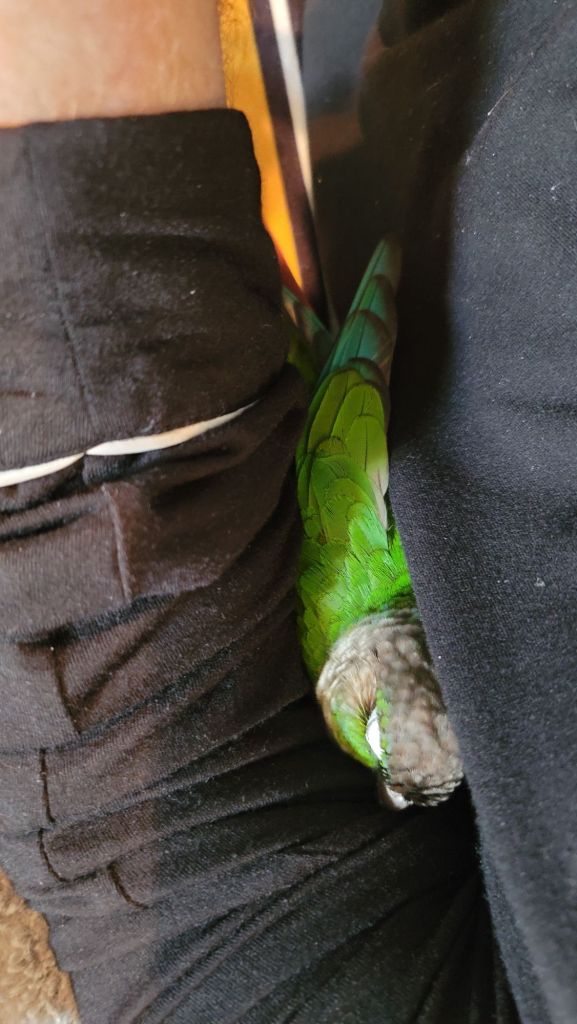
The possibility of an animal bite prompting a report to child protection services is obviously worth taking seriously, and we promised to quickly draft a safety plan and submit it to her office. That took us a quick weekend, and as far as I know it seems to have assuaged the most pressing concerns. Mostly, the plan consists of rules which we already enforce for Yoshi’s own safety: no unsupervised out-of-cage time, no handling except by responsible and trusted individuals, so on and so forth. We think we know our pet well enough to keep him within reasonably safe guidelines.
The trickiest thing about writing the safety plan, however, was striking the right tone. Clearly, the most salient issue for our audience was the safety of our potential future children, and specifically what we planned to do to ensure that safety. However, both Ariele and I found it necessary to provide as much information about Yoshi as possible, in order to clearly communicate that he is not as big of a threat as they might imagine him to be. In a sense, we felt compelled to defend his honor.
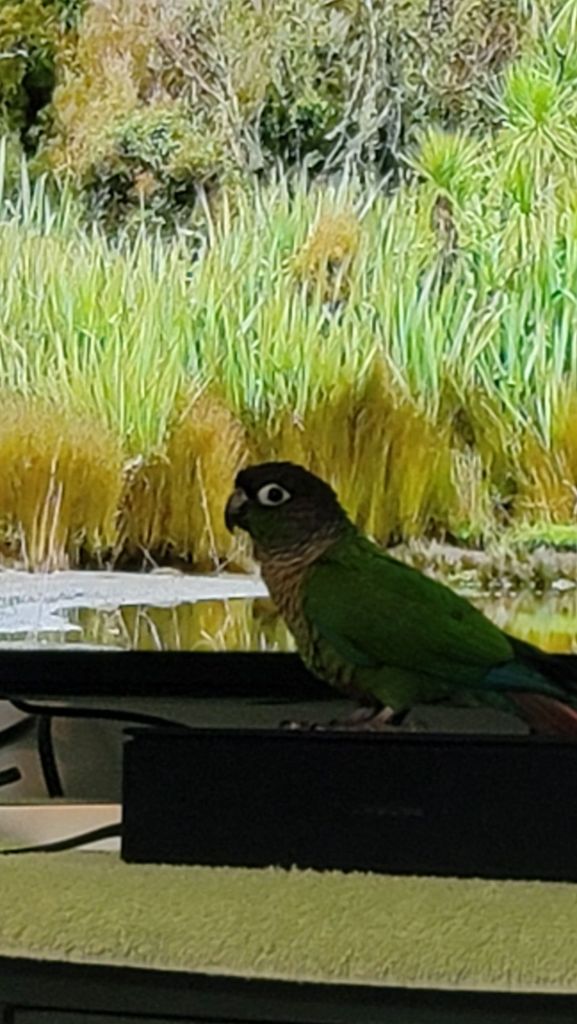
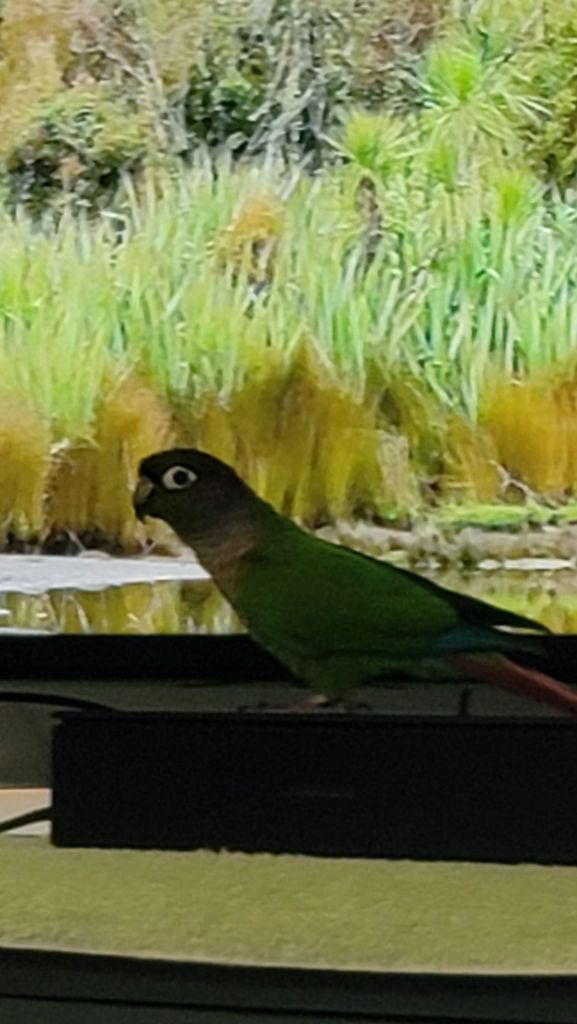
Certainly, nobody meant any offense against the poor bird. It’s natural to have questions and concerns about animals in the home when it comes to potentially placing children there, and those questions should be asked. But as long as they were going to be asking questions about a bird with a known history of swooping toward people and biting them, it’s only fair to contextualize that history.
I don’t know that most people are “afraid” of birds, but most people are probably more afraid of them than I am. Living for many years with small parrots has given me a healthy appreciation for their capabilities, along with the confidence and skill necessary to handle them safely. Perhaps I’m overconfident, but I am much more preoccupied with all of the things that could hurt a bird like Yoshi than with the chance that he might seriously injure a human being.
A little while ago, I was walking up to a pizza joint to pick up my order, and a noisy group of little black birds were gathered in a tree right outside the foor—probably they were protecting a nest. I certainly wasn’t trying to bother them, but apparently I passed so close that one of them felt compelled to swoop out of the tree and ram me in the back of my head. He then perched on a sign and yelled at me for a while. Rather than run away in a panic like a normal person, I smiled at the bird and gave him a gentle scolding. Perhaps when you regularly find your finger has become a chewing stick for an adorable little feathered rapscallion who is peeved about being denied access to the inside of a desk, you start to associate bird attacks with more joyful experiences.
Then again, I am a grown man. I can shake off a little defensive biting from Yoshi, even if he manages to pinch a tender area like my neck and really piss me off for a moment. It just might not be right to be so cavalier about what he could potentially do to a baby. I still doubt he could (or would) do as much damage as some might fear, but too many people have made that mistake with dogs and other kinds of animals. It really is a good idea to make a plan.
So when we wrote our plan, we tried our best to create an accurate and comprehensive understanding of Yoshi not just as a biter, but as a personality. Like all animals he uses his beak for a reason, and understanding his reasons for biting at any given time is the best way to keep everybody safe over the long term. Yoshi’s wellbeing is also a priority for our household, and the goals of child and bird welfare are in fact very closely aligned. With proper understanding and the flexibility to adapt one’s plans to real situations, there is little to fear from such a little guy.


Leave a Reply