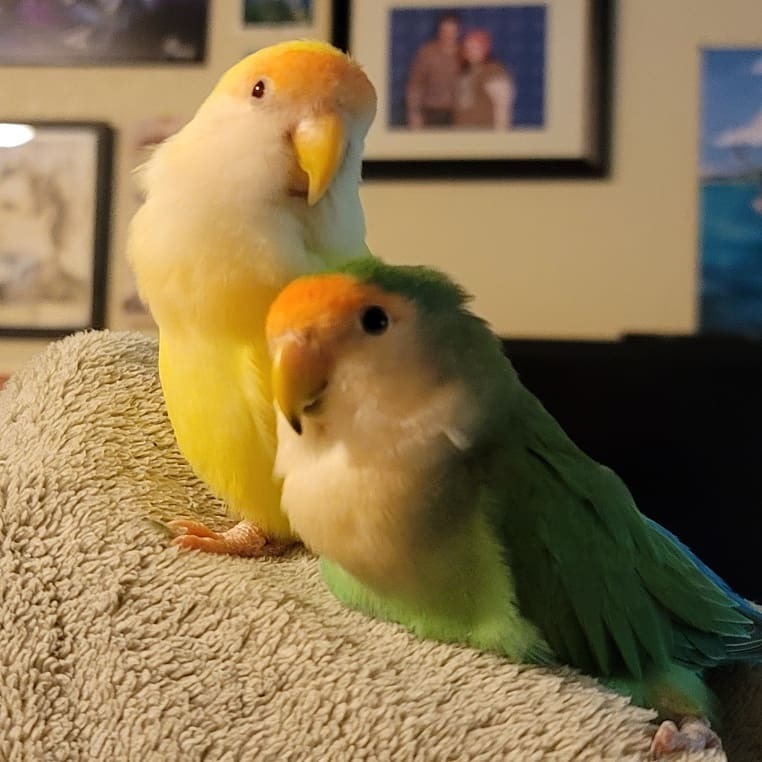
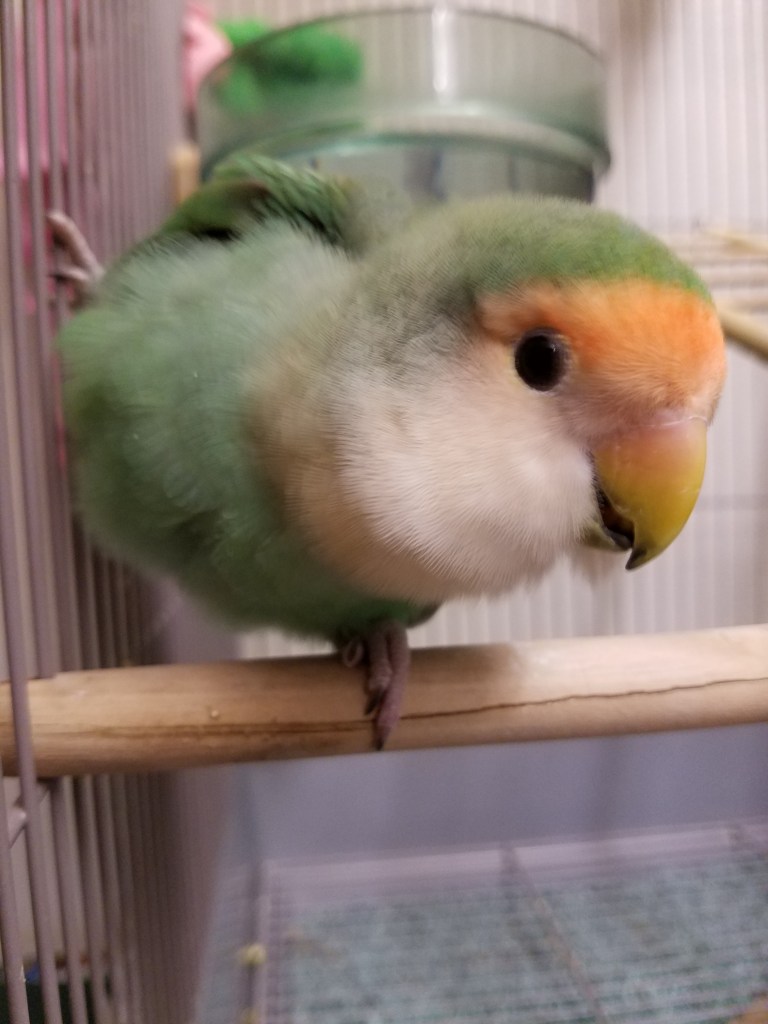
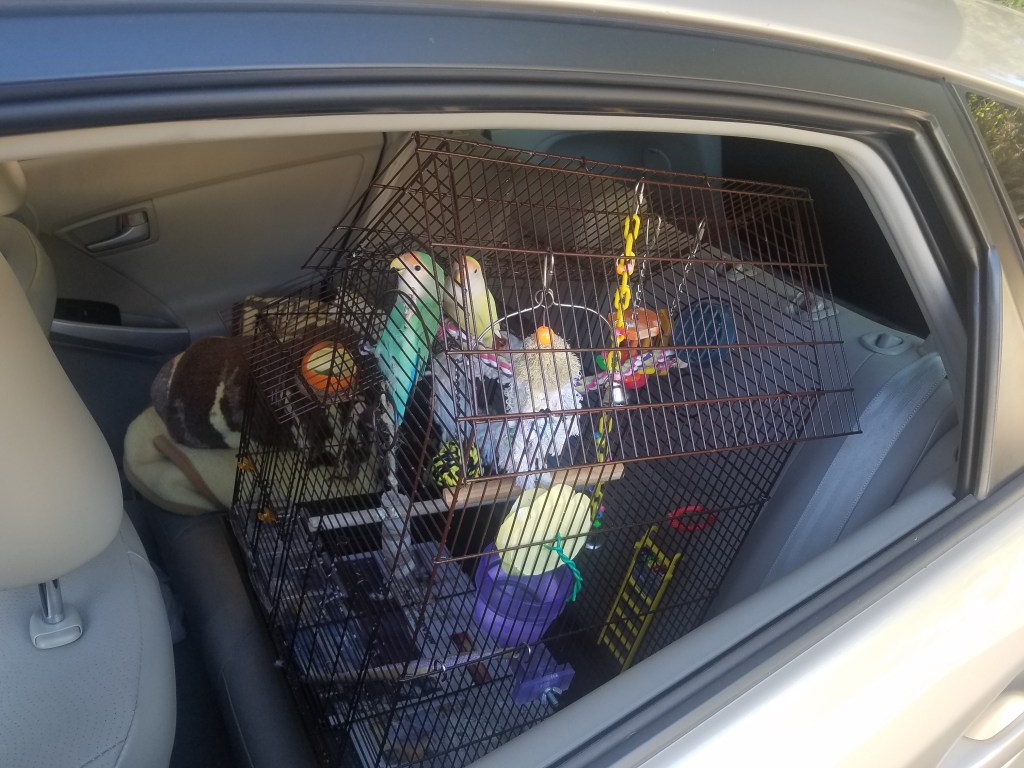
On Thursday, my lovebird Sherbert passed away, as she was receiving medical care. I found her in the morning on the bottom of her cage, apparently having vomited and fallen from her perch in the night. I cleaned her up, gave her some breakfast, and drove her to the veterinarian’s office. She was being tested for various ailments. The signs were mixed; she was underweight, but she was alert, and she had an appetite. We had hope that she might be able to come home that evening, but it wasn’t to be.
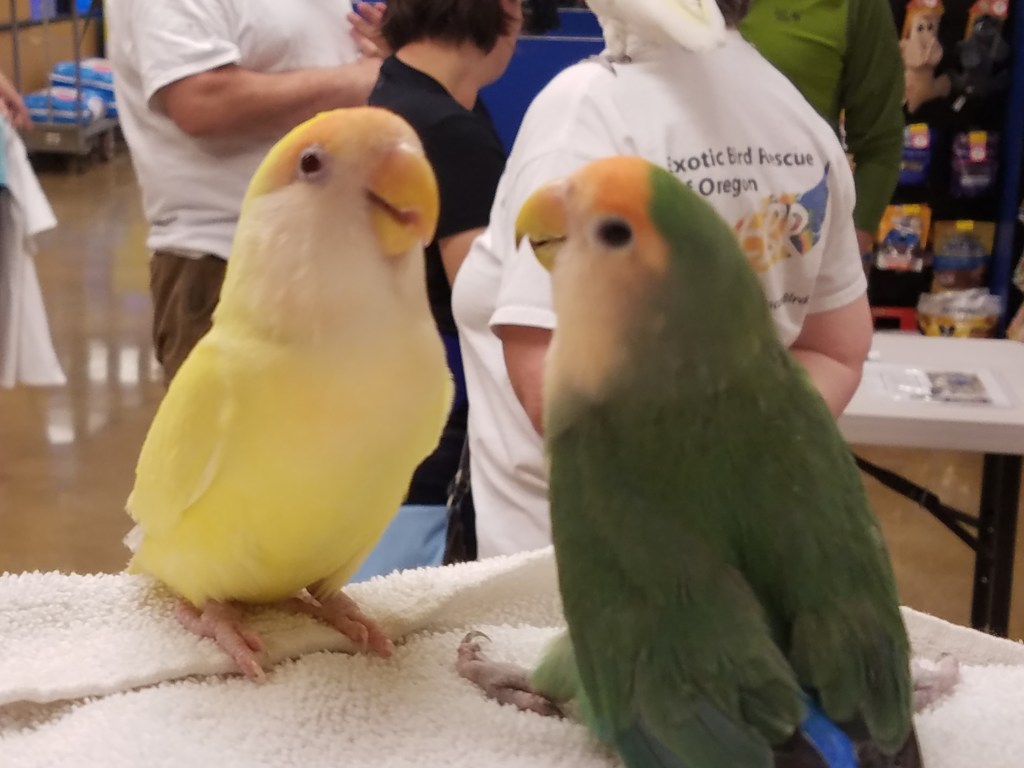
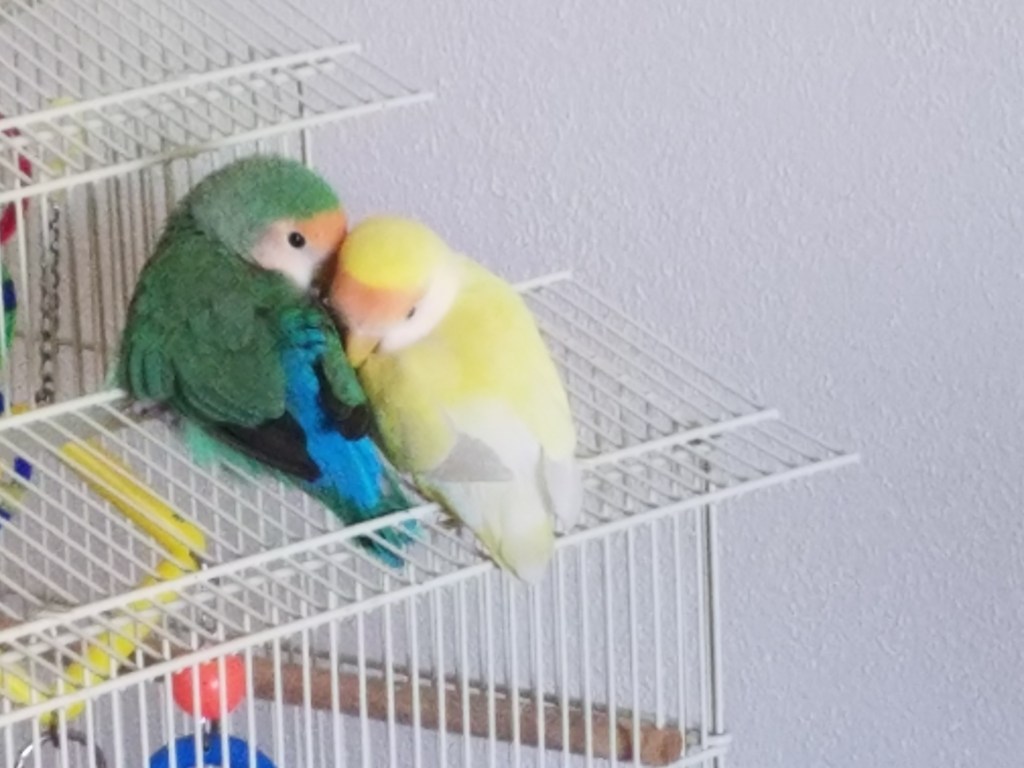
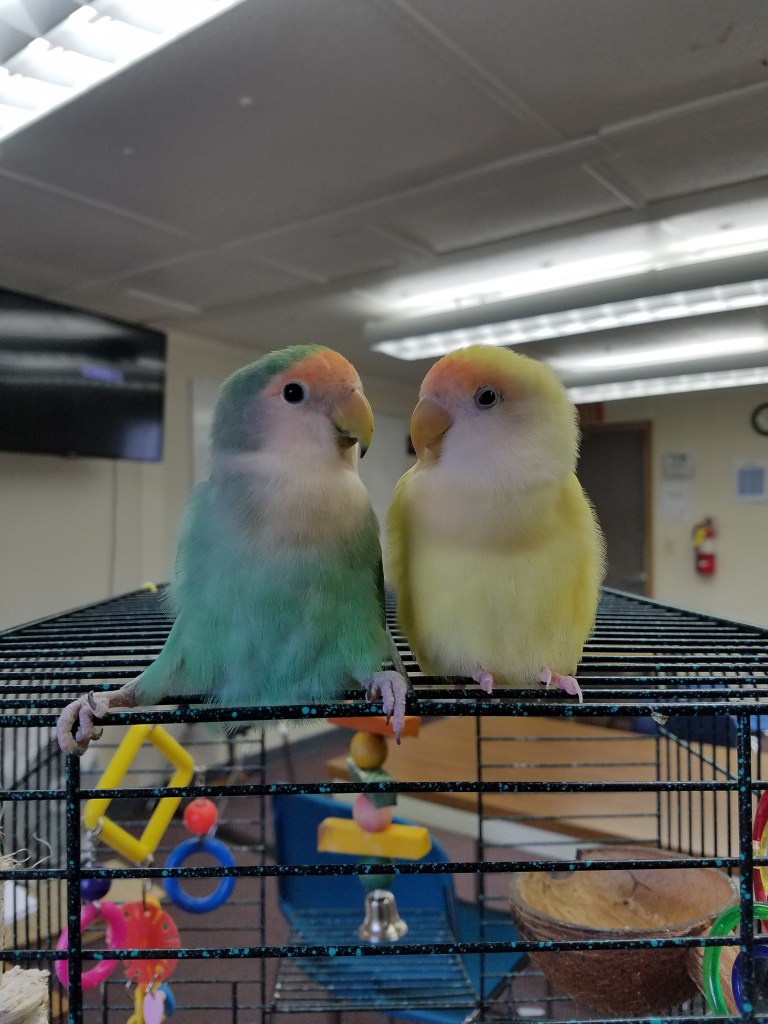
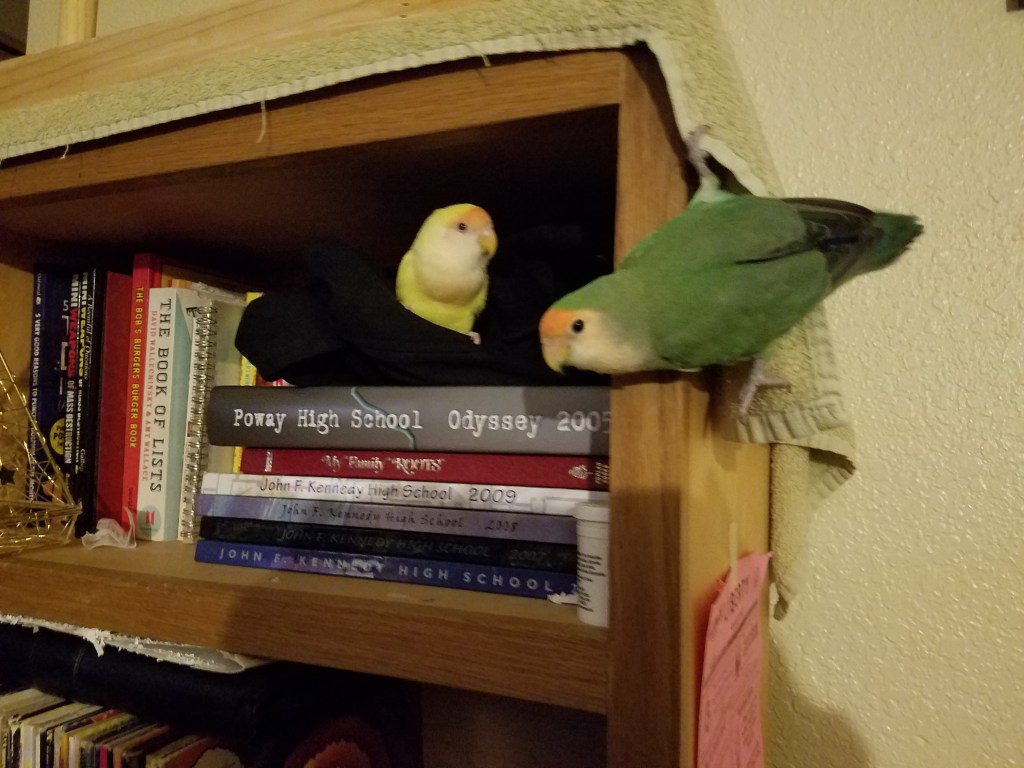
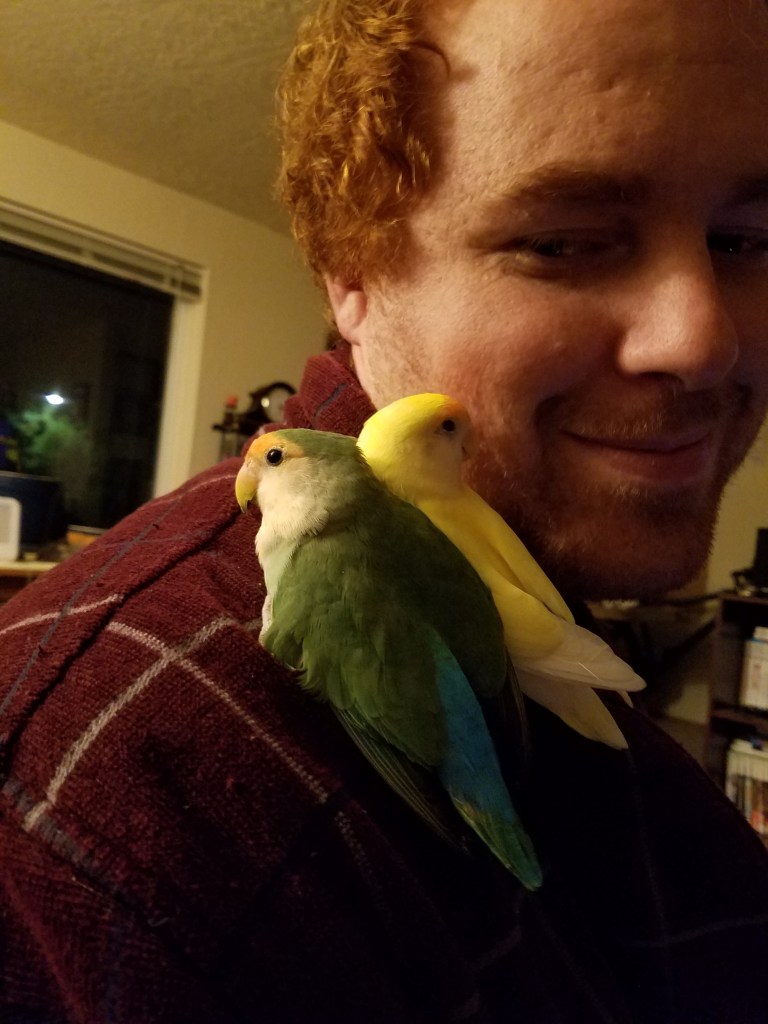
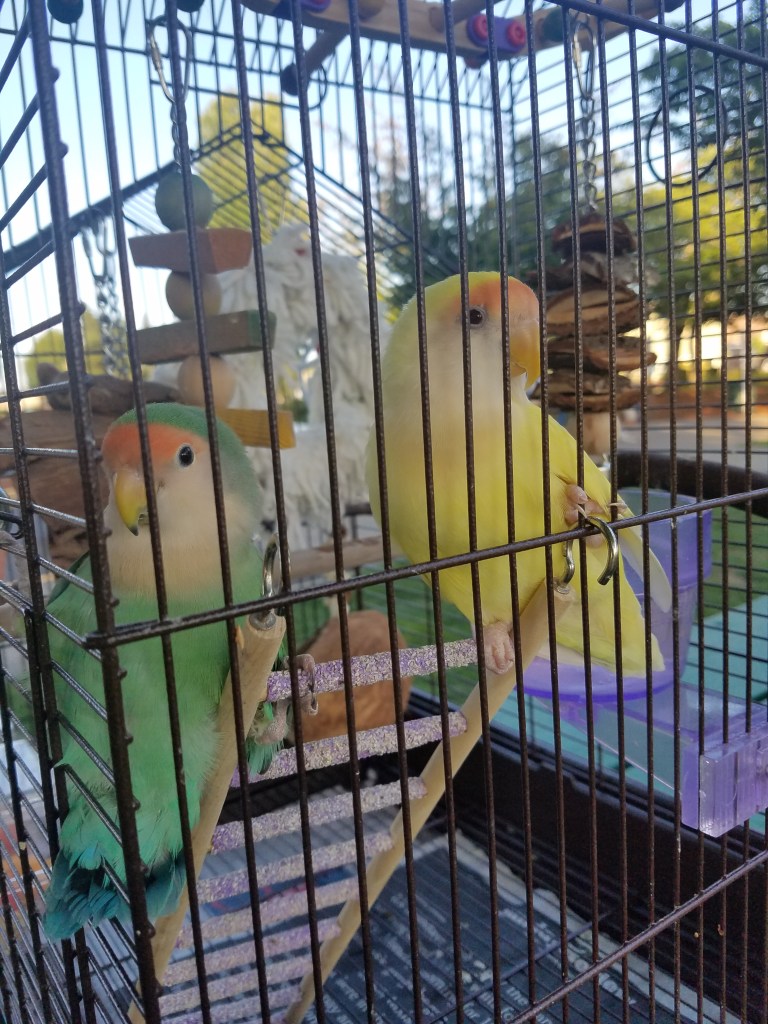
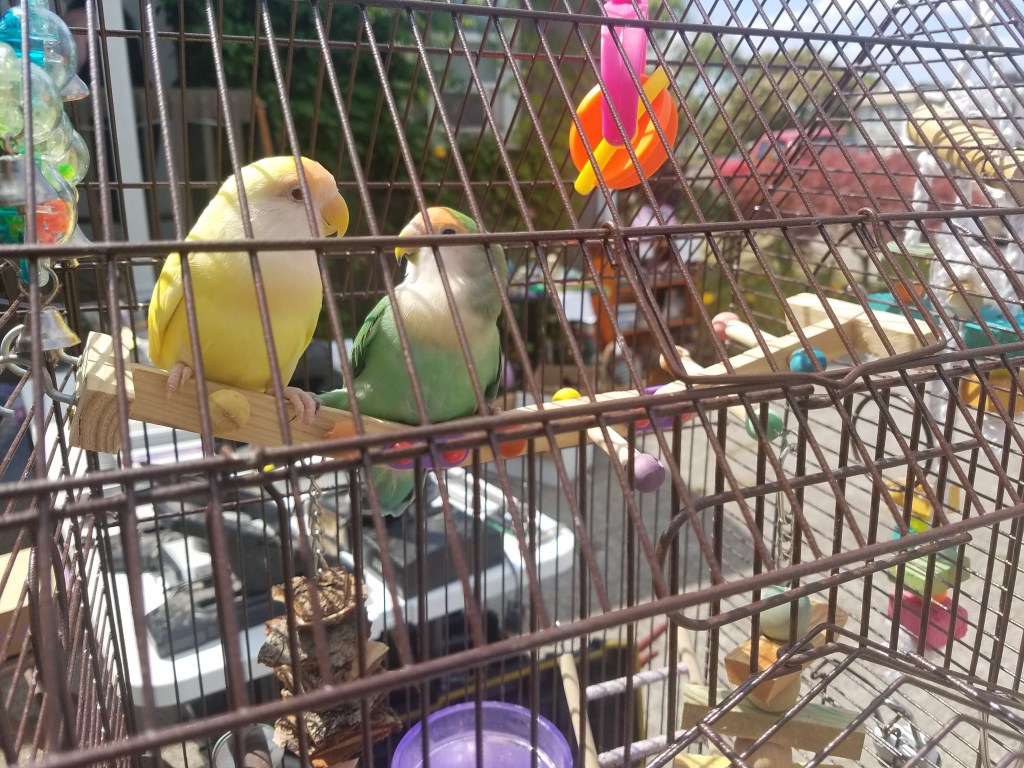
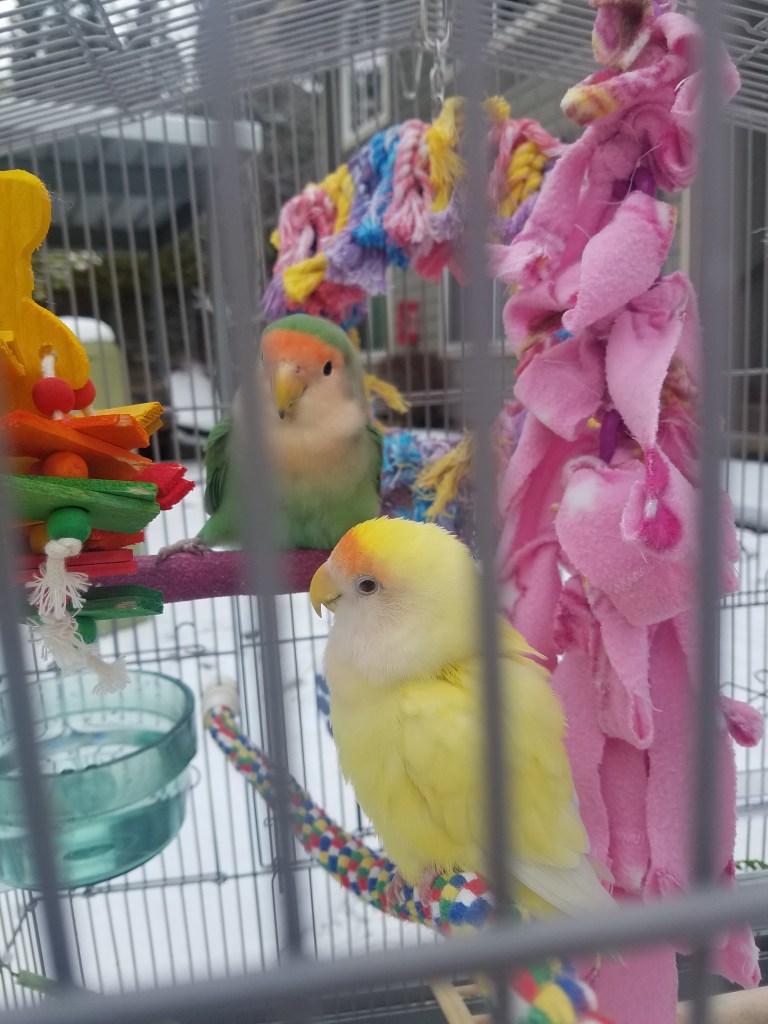
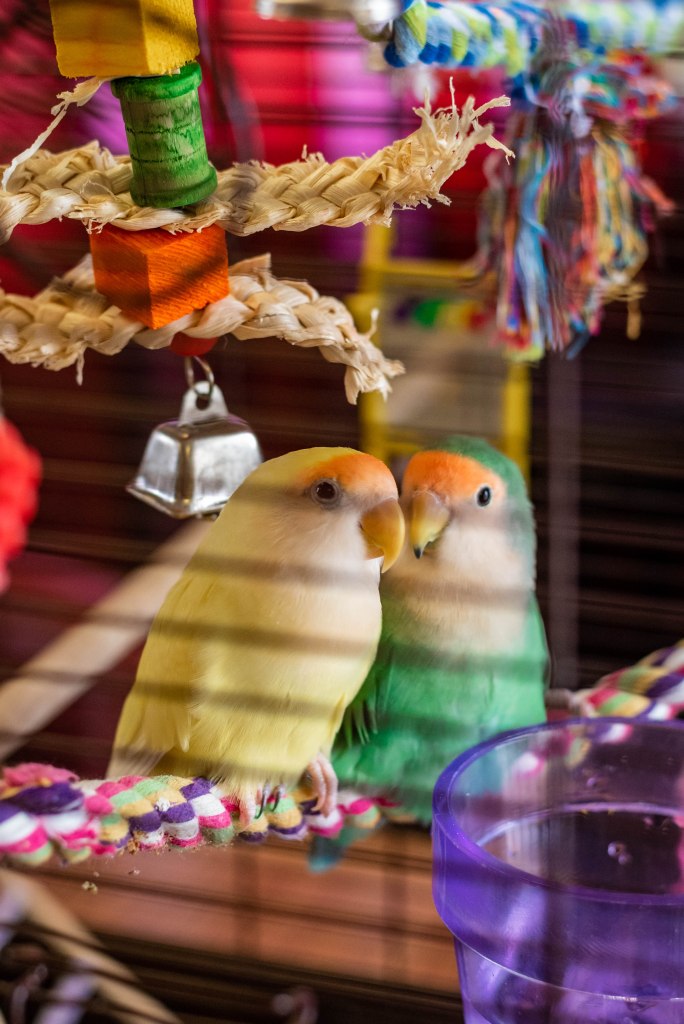
I met Sherbert and her late mate Bonnie a little over eight years ago; though we lacked documentation, I believed them to both be about three years old at the time. A few weeks later I met my wife, Ariele. We saw our love for each other reflected in the way these two small creatures cared for each other, and their constant desire to be be close to each other and call out to one another. Part of this was a silly exercise in anthropomorphism, but something that people who don’t spend a lot of time with animals – particularly birds – may not understand, is that they have very powerful feelings. In their minds those feelings can be everything, and in that way they are no different from us.
When Bonnie died, I had to clean out her cage and put it away. When Sherbert caught a glimpse of it a week later as I was moving things around, she called out to it, just like she used to call to Bonnie. She couldn’t understand why things were different, and I couldn’t understand what she was thinking about – except that she missed her constant companion. I think anybody can understand that.
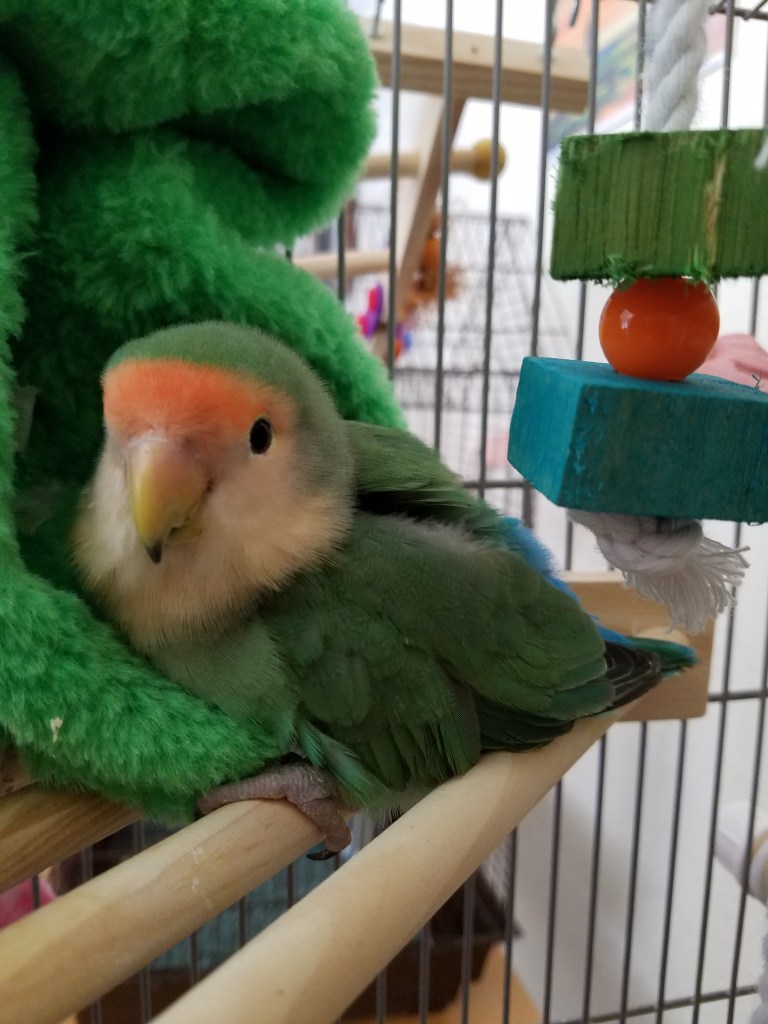
When I first adopted them, I took them to a vet for an evaluation (this was a different vet than the one who has seen my birds for the last several years). Both birds were in great health, as they would remain until Bonnie’s death six years later. Sherbert, however, had an obvious disability in her splayed legs, and the doctor noted that she had a slight irregularity in her heartbeat. He warned me that it was something that was likely to shorten her lifespan, though by how much was impossible to say. It naturally took me by surprise when she turned out to be the longer-lived of the two, but I was determined that however long she had left, she’d live in comfort and know that she was loved.
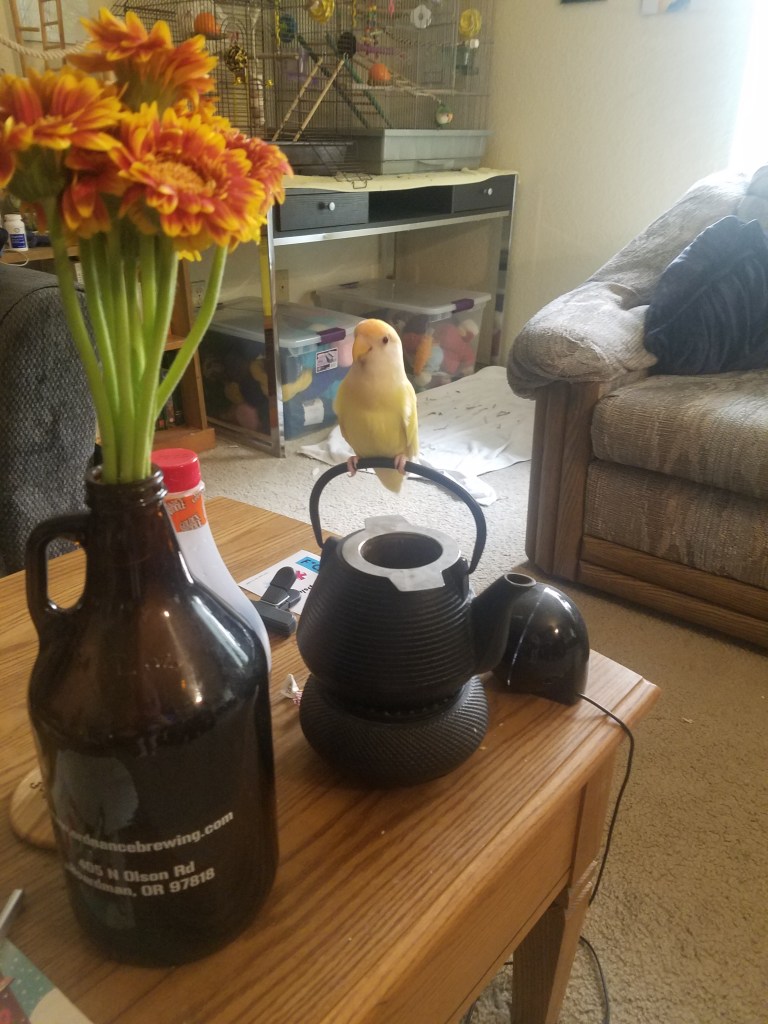
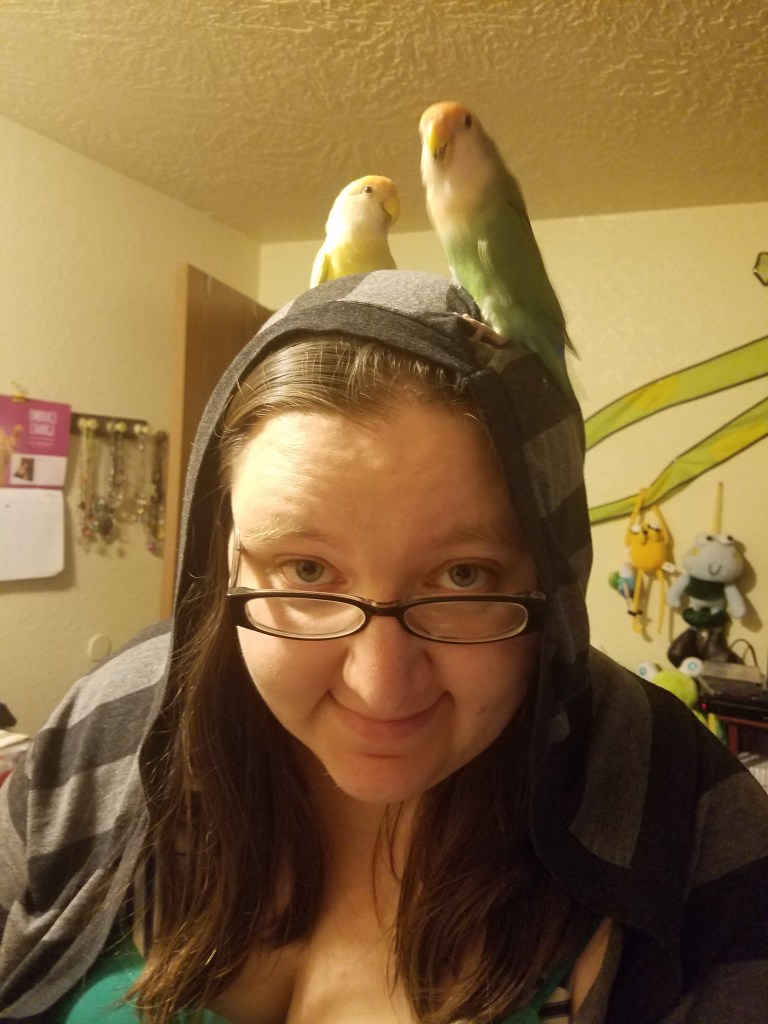
Because of her legs, and maybe because of her heart, she didn’t get around quite as much as some birds do. She had spots she liked to settle into: her hanging triangle perch was a favorite, which we ended up having to place a bath mat under to catch her frequent droppings; leaning with one leg up against the pictures on the mantle, including one of her and Bonnie together, though I’ll never know to what extent she recognized it as such; on various shelves and cabinet spaces, where we would leave her spare paper to chew to her heart’s content; sometimes, when she felt very bold, on pillows, cushions, and even shoulders.
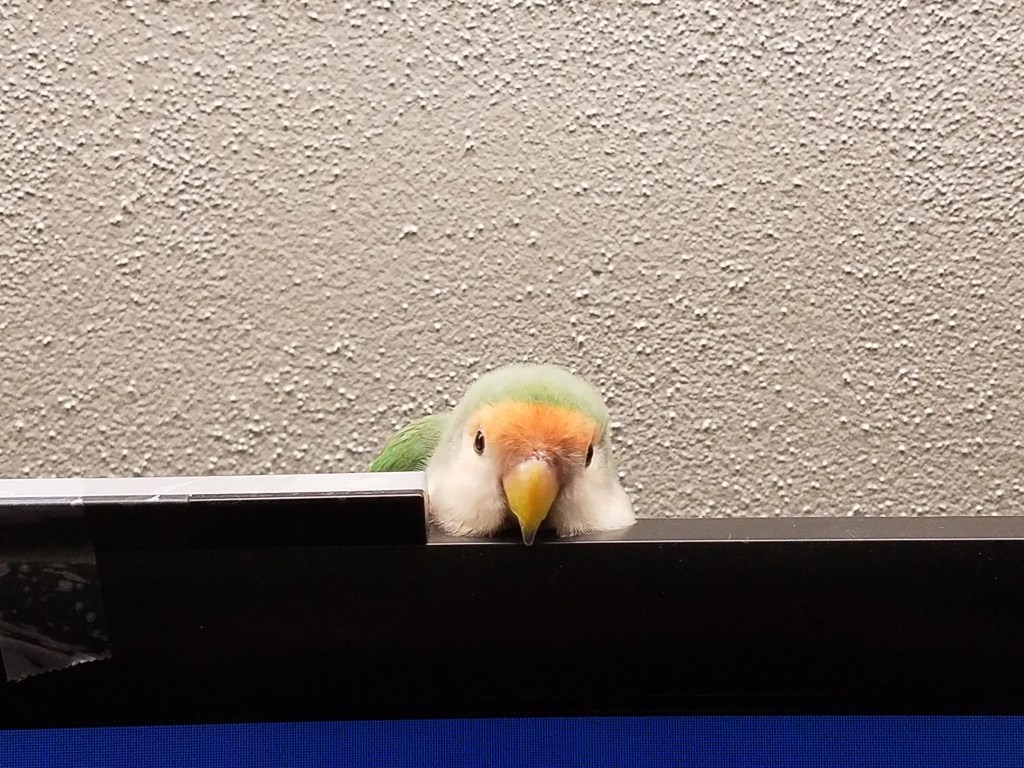
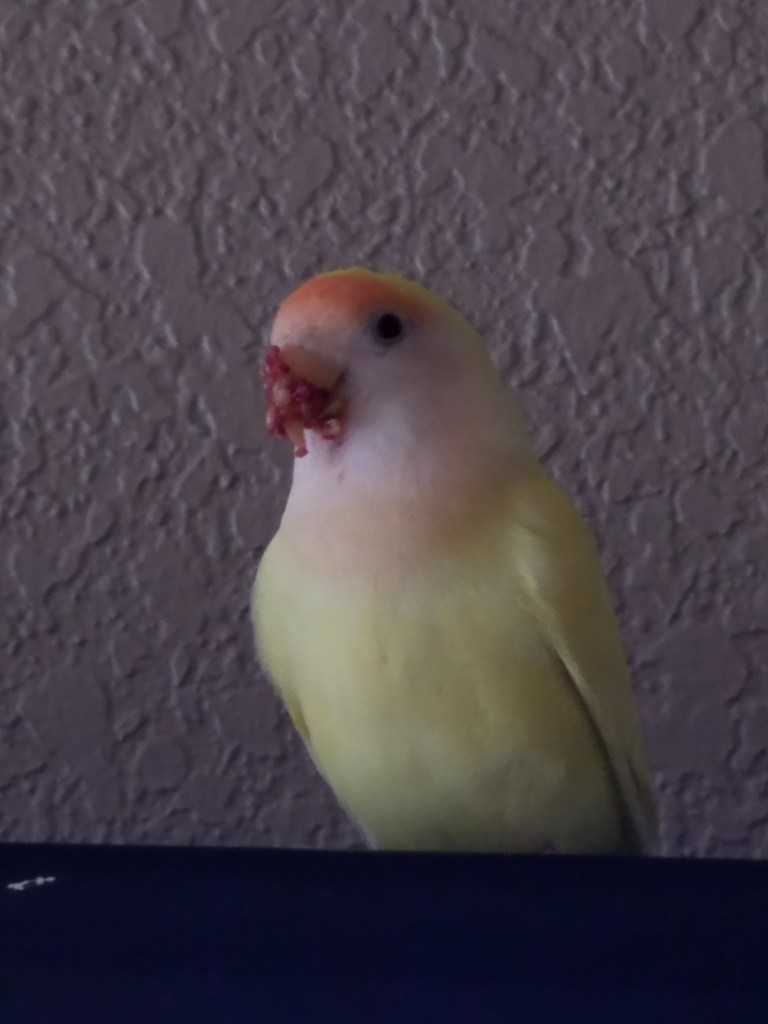
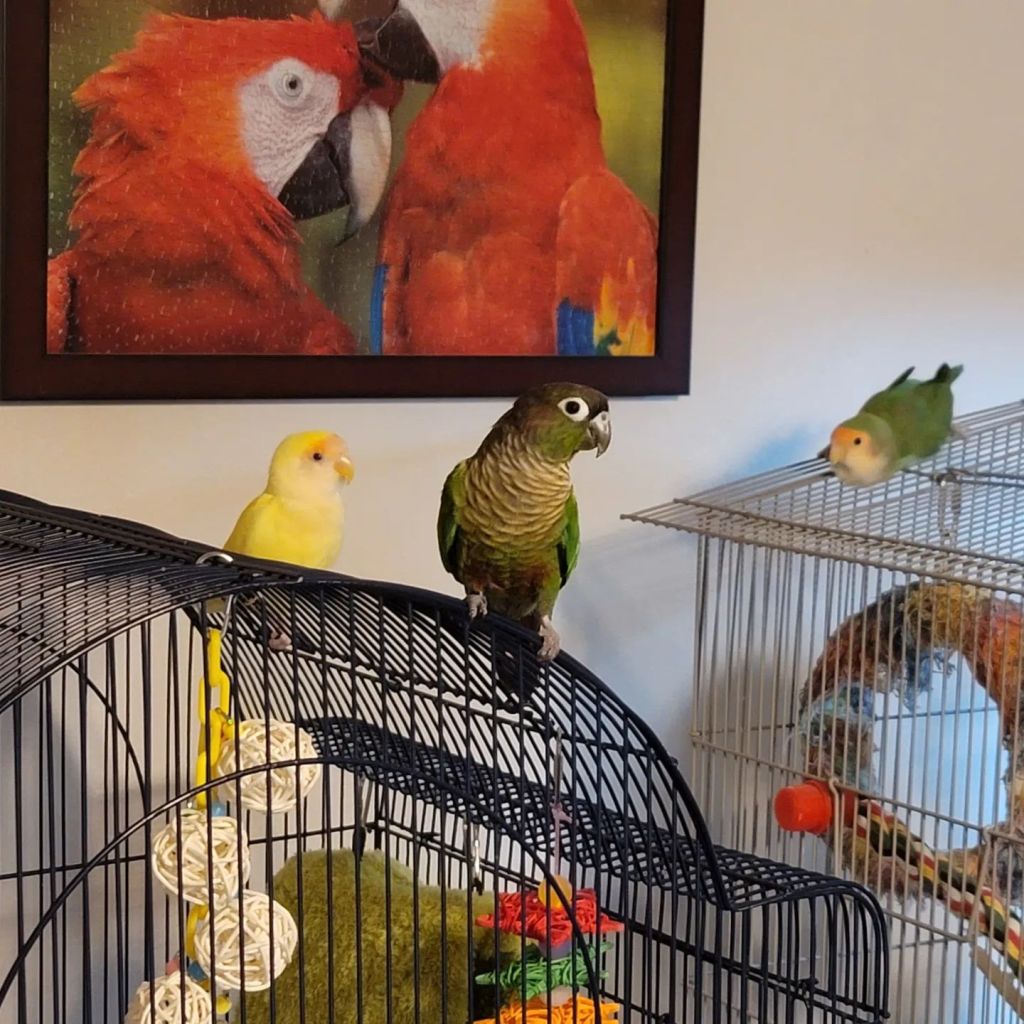
She was a sweet, gentle bird, who didn’t necessarily want to be handled all the time, but would let you carry her peacefully if you needed to, and never bite too hard when you picked her up. She invariably called out when she heard wild birds from outside the window, or whenever she heard something she thought was a bird, like the trumpets at the end of “Madness in Great Ones.” She could be naughty and try to steal Yoshi’s food in daring raids on his cage, or chew on forbidden paper despite our always providing her with plenty of her own; in this and many things, she was indefatigable. I’ve never seen an animal’s eyes light up like hers could when presented with a stick of millet.
In many languages, lovebirds are popularly known as “inseparables.” It is some comfort to Ariele and me that “Bonnie Boo” and “Sherbie Doo” will be reunited under a garden between two trees in our yard. We can never forget the happiness they brought us, and the example they made of loving one another.

 Ink Tea Stone Leaf
Leave a comment